Journaling Tips for a Creative Lifestyle
Let’s be honest, most people love the idea of journaling more than they actually enjoy doing it.
You buy a notebook. Maybe even a really aesthetic one. You write a few pages… and then life happens. The habit fades, and the journal ends up sitting there, untouched.
If that sounds familiar, you’re not alone.
But here’s the truth: journaling isn’t about writing perfectly or consistently every single day. It’s about creating a space for your thoughts, your creativity, and your clarity. And when done right, it becomes one of the most effective tools for building a creative lifestyle, improving self-care, and organizing your life with a few practical planning tips.
Let’s make journaling feel simple and actually sustainable.
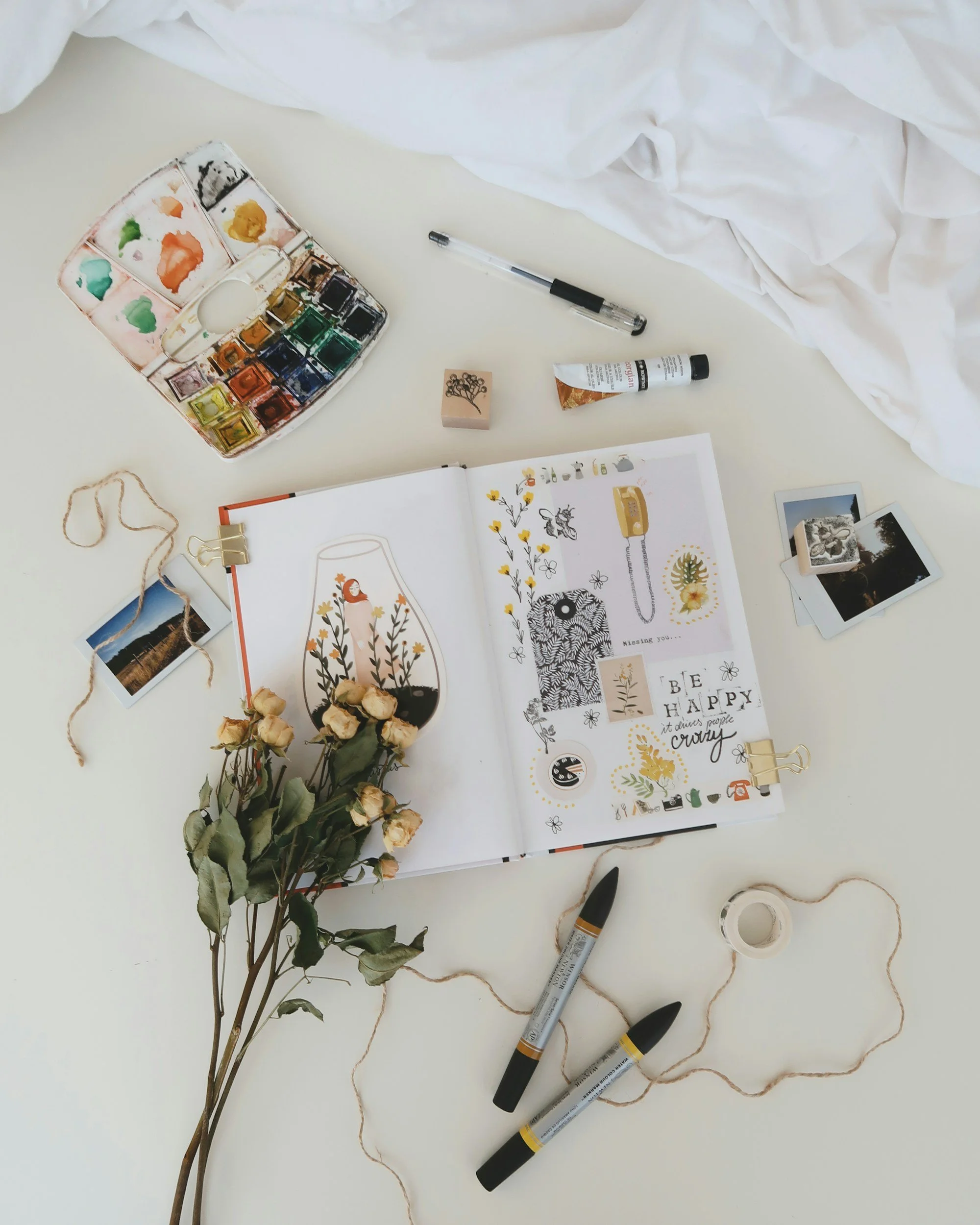
Why Journaling Matters for a Creative Lifestyle
A creative lifestyle isn’t just about painting, writing, or making content. It’s about how you think, process ideas, and express yourself daily.
Journaling helps you:
Capture ideas before they disappear
Reduce mental clutter
Reflect on your habits and goals
Build self-awareness
Stay present
Research shows that journaling can improve emotional clarity, reduce stress, and even enhance problem-solving skills (Journal for Wellbeing). It’s not just a “nice habit”, it’s a powerful mental tool.
Let’s Address the Biggest Objections
Before we get into actual journaling ideas, let’s clear the mental blocks.
“I don’t have time.”
You don’t need 30 minutes.
Studies show even short journaling sessions can improve mood and reduce stress (Haven Psychology Group). Five minutes is enough.
“I don’t know what to write.”
This is the #1 reason people quit.
The solution? Structure. Prompts give your brain direction, making it easier to start and continue (Positivity).
“I’m not creative.”
Journaling builds creativity, it doesn’t require it.
According to Psychology Today, journaling helps unlock creative thinking by allowing ideas to flow freely without judgment (“How Creatives Can Instantly Benefit from Journaling”).
“I can’t stay consistent.”
Consistency doesn’t mean daily.
Research suggests flexible journaling habits are more sustainable than rigid routines (Psychology Today).
1. Start With Low-Pressure Journaling
If you’ve struggled before, you probably made journaling too complicated.
Simplify it:
Write 3 sentences about your day
List what’s on your mind
Answer one question
That’s it.
This approach reduces resistance and makes it easier to stick with long-term.
2. Use Prompts to Unlock Creativity
Prompts are one of the most effective journaling ideas because they remove the pressure of “figuring out what to say.”
Try these:
What inspired me today?
What am I overthinking right now?
What would my ideal day look like?
What’s one thing I want to improve this week?
What ideas have I been ignoring?
Prompts help guide your thinking, and once you start writing, your brain naturally fills in the gaps.

3. Combine Journaling With Planning
This is where journaling becomes truly powerful.
Instead of just reflecting, start connecting your thoughts to action.
A simple structure:
Brain dump everything on your mind
Highlight what matters
Turn it into a short plan
This method improves productivity and clarity, something supported by research showing journaling enhances goal-setting and decision-making (Haven Psychology Group).
If you’re looking for practical planning tips, this is one of the easiest ways to start.
4. Turn Journaling Into Self-Care
Journaling shouldn’t feel like a task. It should feel like a reset.
Research shows journaling can reduce stress and improve emotional regulation, making it an effective self-care practice (iajw.org).
Make it enjoyable:
Light a candle
Play music
Sit somewhere comfortable
Pair it with your morning coffee or nighttime routine
Even a few minutes can shift your entire mood.
5. Try Different Journaling Styles
You don’t have to journal the same way every time.
Switching styles keeps things interesting and prevents burnout.
Brain Dump
Write everything—no structure.
Gratitude Journaling
List 3–5 things you appreciate.
Goal Journaling
Focus on what you’re working toward.
Creative Journaling
Sketch, brainstorm, or write freely.
Reflection Journaling
Look back on your day or week.
Research shows that different journaling methods can support both emotional processing and creativity (Journal for Wellbeing).
6. Let It Be Messy
Your journal is not meant to be perfect.
In fact, expressive writing works best when it’s unfiltered and honest (Psychology Today).
Write messy sentences. Jump between thoughts. Cross things out.
The less pressure you put on yourself, the more useful journaling becomes.
7. Use Journaling to Build a Creative Identity
If you want a creative lifestyle, start thinking like a creative person.
Ask yourself:
What ideas excite me?
What do I want to explore?
What would a more creative version of me do?
Journaling helps reinforce identity by making your thoughts more intentional and visible.
Over time, this shapes how you act.
8. Track Patterns and Progress
One of the biggest benefits of journaling is awareness.
Research shows that reflective writing helps people recognize behavioral patterns and improve decision-making (Haven Psychology).
You’ll start noticing:
What drains your energy
What motivates you
What habits are helping (or hurting) you
That awareness is what leads to real change.

9. Don’t Wait for Motivation
You don’t need to feel inspired to journal.
In fact, journaling is most effective when you’re overwhelmed, stuck, or unsure.
On those days, keep it simple:
“Today feels…”
“Right now I’m thinking…”
“I don’t feel like writing, but…”
Even minimal effort still creates clarity.
10. Make Journaling Part of Your Lifestyle
This is the shift that makes everything stick.
Instead of treating journaling like a task, treat it like a tool.
It becomes:
A thinking space
A creative outlet
A planning system
A self-care ritual
And when it serves multiple purposes, it naturally becomes part of your routine.
The Missing Piece: Ongoing Inspiration
Here’s where many people fall off.
They start journaling but eventually feel stuck, bored, or uninspired.
That’s completely normal.
New ideas, fresh perspectives, and creative inspiration are what keep the habit alive.
Take Your Creative Lifestyle Further
If you’re ready to go beyond basic journaling and actually build a lifestyle that feels intentional, creative, and aligned—you need more than just tips.
→ Explore our Spring Awakening issue here:
Inside, you’ll find:
Creative lifestyle inspiration
Practical planning tips
Self-care ideas you can actually apply
Style and mindset guidance for everyday life
It’s designed to help you not just journal, but truly elevate how you live.
In conclusion, journaling doesn’t have to be complicated to be powerful.
You don’t need:
Perfect structure
Long entries
Daily consistency
You just need a space to think.
Start small. Keep it simple. Let it evolve.
When you build journaling into your life, you’re not just writing, you’re designing a life that actually feels like yours.
And that’s what a creative lifestyle is all about.